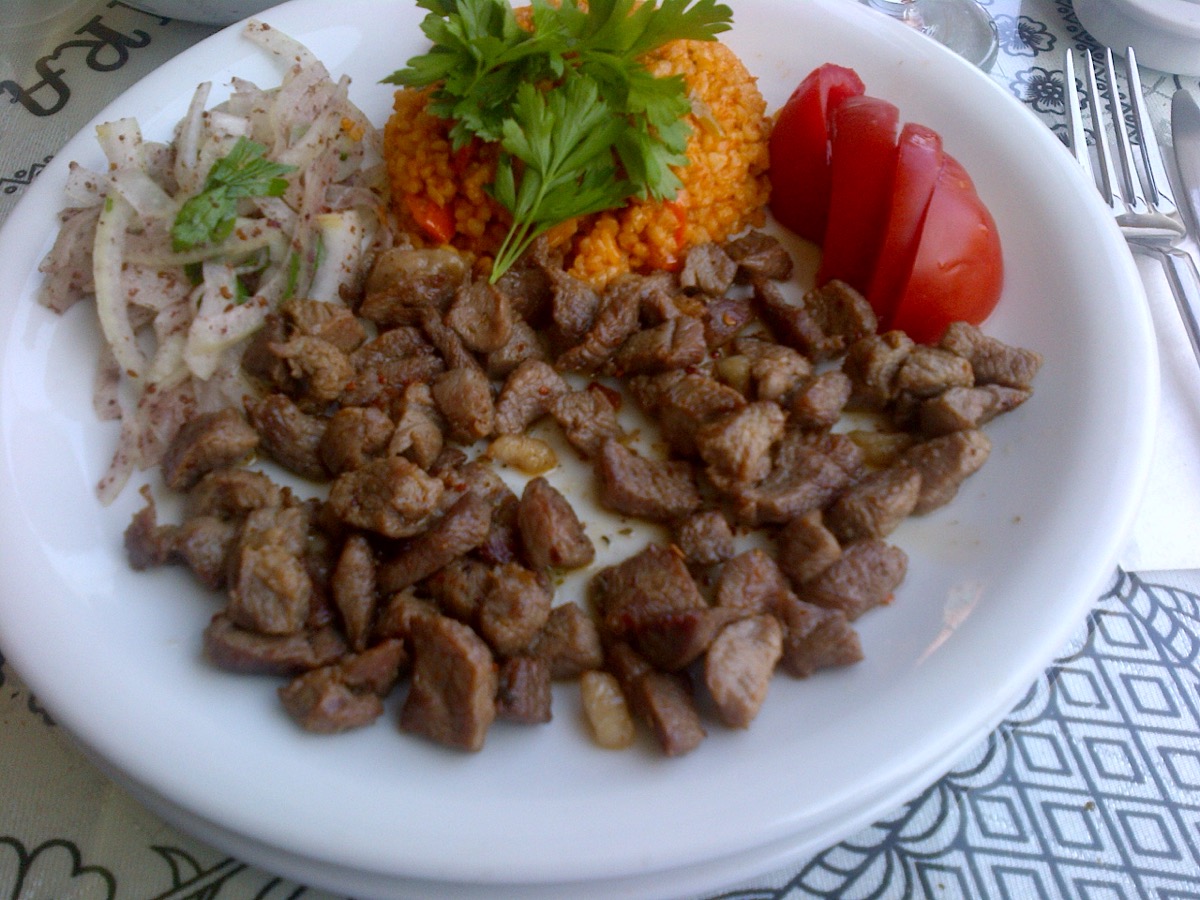
Ghavurma is an ancient Armenian method of preserving meat by cooking it slowly in its own fat. The cooked meat is then stored submerged in the rendered fat, which acts as a seal against spoilage. It was traditionally made in autumn to last through winter.
Ingredients
- 2 kg lamb shoulder or leg (with fat)
- 500 g lamb tail fat (or additional fatty lamb)
- 2 tbsp salt
- 1 tsp black pepper
- 1 tsp allspice
- 0.5 tsp cinnamon (optional)
Instructions
-
1
Cut lamb into 2-inch cubes, keeping the fat attached. Cut tail fat into chunks.
-
2
Place tail fat in a large heavy pot over low heat. Render until liquid fat pools in the pot.
-
3
Add the lamb cubes to the pot. Season with salt, pepper, and spices.
-
4
Cook over low heat for 2-3 hours, stirring occasionally. The meat should cook slowly in the fat.
-
5
When meat is very tender and fat is completely rendered, transfer meat to sterilized jars.
-
6
Pour the hot fat over the meat, ensuring it is completely covered. No meat should be exposed.
-
7
Let cool completely. The fat will solidify and seal the meat. Store in a cool place or refrigerate.
Tips & Variations
The meat must be completely submerged in fat to preserve properly. Traditionally stored in clay pots. When using, scoop out some meat and fat together - the fat is delicious for frying eggs.
Cultural Background
Ghavurma was an essential part of Armenian food preservation before refrigeration. Families would slaughter sheep in autumn and preserve the meat as ghavurma to last through the harsh winter months. It remains a cherished tradition in rural areas.
Region: All regions