
The Kingdom of Urartu: Mountain Fortress of the Ancient Near East
In the rugged, lake-dotted highlands of what is now eastern Turkey, northwestern Iran, and Armenia, a formidable Iron Age civilization rose to challenge the might of Assyria. This was the Kingdom of Urartu (c. 850–590 BCE), a state whose name derives from the Assyrian term for its mountainous homeland. For nearly three centuries, Urartu dominated the region through military prowess, sophisticated hydraulic engineering, and the construction of nearly impregnable fortresses, the greatest of which was its capital at Tushpa, modern Van.
The Rise: Forging a Kingdom from the Highlands
Urartu emerged in the 9th century BCE as a unification of various Nairi tribes in the Armenian Highlands, largely in response to the expansionist pressure of the Neo-Assyrian Empire to the south. The Assyrian annals of Shalmaneser III (858–824 BCE) provide the earliest records, describing military campaigns against a coalition of "kings of Urartu." This external threat catalyzed political centralization. By the reign of King Sarduri I (c. 832–820 BCE), a unified monarchy was established. He famously inscribed his achievements in Assyrian cuneiform on the walls of the Van Fortress, declaring, "This is the inscription of Sarduri, son of Lutipri, the great king, the mighty king, king of the universe, king of the land of Nairi." This bold proclamation signaled Urartu's arrival as a peer to Assyria.
The kingdom reached its zenith under kings like Menua (c. 810–786 BCE) and Argishti I (c. 786–764 BCE). They embarked on massive campaigns of expansion, pushing the borders from the Euphrates River in the west to Lake Urmia in the east, and from the Caucasus Mountains in the north to the plains of northern Mesopotamia. This created a powerful, multi-ethnic state that controlled vital trade routes in metals, especially iron and bronze.
The Heart of the Kingdom: Tushpa and the Van Fortress
The political and spiritual center of Urartu was its capital, Tushpa, centered on the awe-inspiring Van Fortress (Van Kalesi). Built upon a sheer conglomerate rock bluff 100 meters high, 1.3 kilometers long, and 200 meters wide overlooking Lake Van, the fortress was a masterpiece of military architecture and a symbol of royal power. The site was not merely a citadel but a complex administrative, religious, and residential center. Kings carved elaborate cuneiform inscriptions into the living rock, recording their conquests, construction projects, and dedications to the chief Urartian god, Haldi.
The fortress was the nucleus of a larger urban settlement at its base. Urartian engineering prowess was most famously displayed in their hydraulic works. They constructed a vast network of canals—some stretching over 50 kilometers—to bring water to the arid plains for agriculture and to supply their cities. The "Canal of Menua" (Şamram Su) near Van remains partially functional to this day, a testament to their skill.
A Culture of Fortresses and Innovation
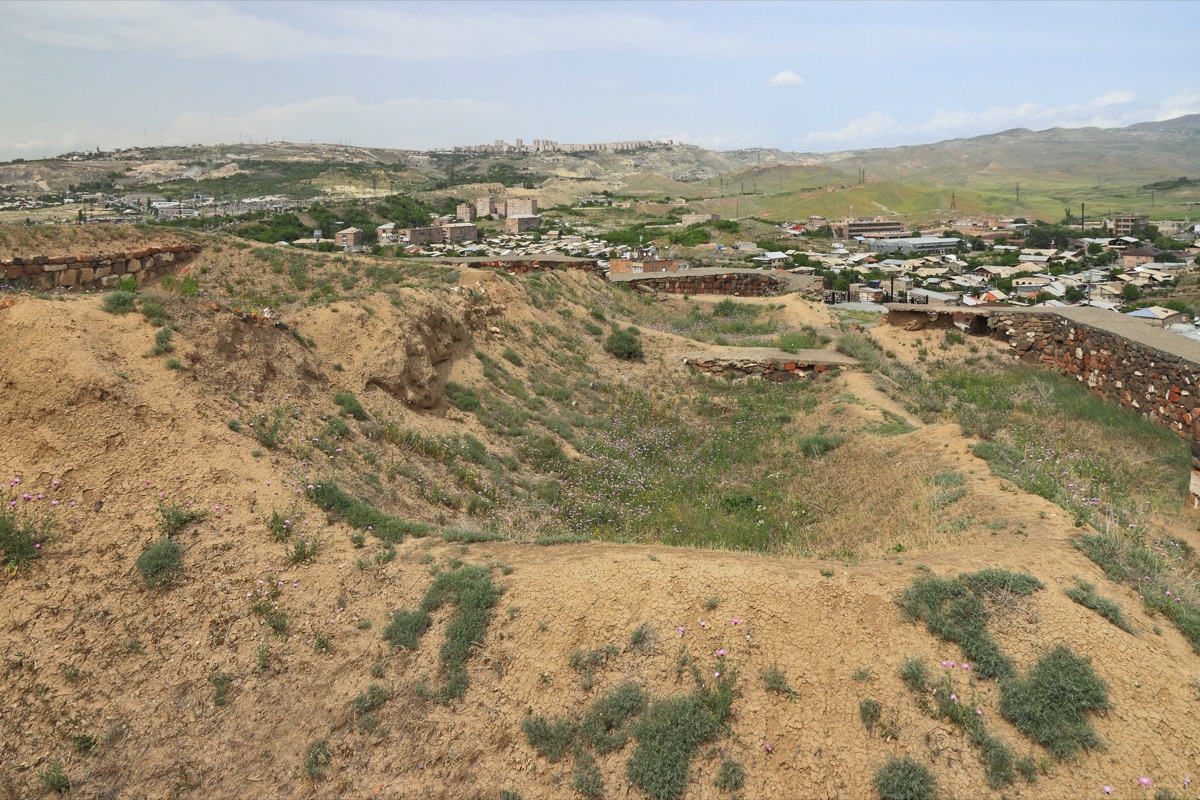
Urartian power was projected through a network of similar fortresses built on strategic heights across the kingdom, serving as provincial centers, storehouses, and military bastions. Sites like Erebuni (modern Yerevan) and Teishebaini (Karmir Blur) followed the Van model. The state economy was highly organized, based on intensive agriculture enabled by irrigation, viticulture, animal husbandry, and especially metallurgy. Urartian bronze cauldrons, helmets, shields, and finely worked horse trappings were highly prized across the ancient world.
The Fall: Assault from All Sides
The decline of Urartu began in the late 8th century BCE. Although King Sarduri II (c. 764–735 BCE) enjoyed successes, a catastrophic defeat by the Assyrian king Tiglath-Pileser III in 743 BCE shattered Urartian prestige and halted its expansion. The kingdom was further weakened by internal strife and, crucially, by the arrival of new nomadic groups from the north, notably the Cimmerians and Scythians, who ravaged the highlands in the 7th century BCE.
The final blow likely came from a combination of these factors. Assyrian records describe a major campaign by King Sargon II in 714 BCE that reached Lake Urmia and looted the temple of Haldi at Musasir, a profound spiritual and economic shock. While Urartu survived this, it was left vulnerable. The exact circumstances of its collapse are unclear, but by the early 6th century BCE, the kingdom had disintegrated. Its heartland around Lake Van was absorbed by the emerging Median Empire, and later the Persian Achaemenid Empire. The Van Fortress, however, remained a strategically important site for every subsequent empire in the region.
Legacy: The Foundation of Armenian Civilization
The fall of Urartu was not the end of its cultural legacy. There is significant linguistic, religious, and material continuity between Urartu and the later Kingdom of Armenia that arose in the same region. Many Urartian fortresses were reoccupied and rebuilt by the Armenians. The Urartian language, while distinct, likely coexisted with early forms of Armenian, and the Armenian ethnogenesis occurred within the political and geographical framework established by the Urartian state. Thus, the Kingdom of Urartu stands not as a forgotten empire, but as the foundational Iron Age civilization of the Armenian Highlands, whose monumental ruins, like the silent sentinel of Van, continue to dominate the landscape and inspire awe.