
Back to History
Ancient (Before 300 AD)
405 AD
The Armenian Alphabet: Mesrop Mashtots and the Gift of Letters
In 405 AD, the monk Mesrop Mashtots created the Armenian alphabet, preserving the Armenian language and enabling a golden age of literature and scholarship.
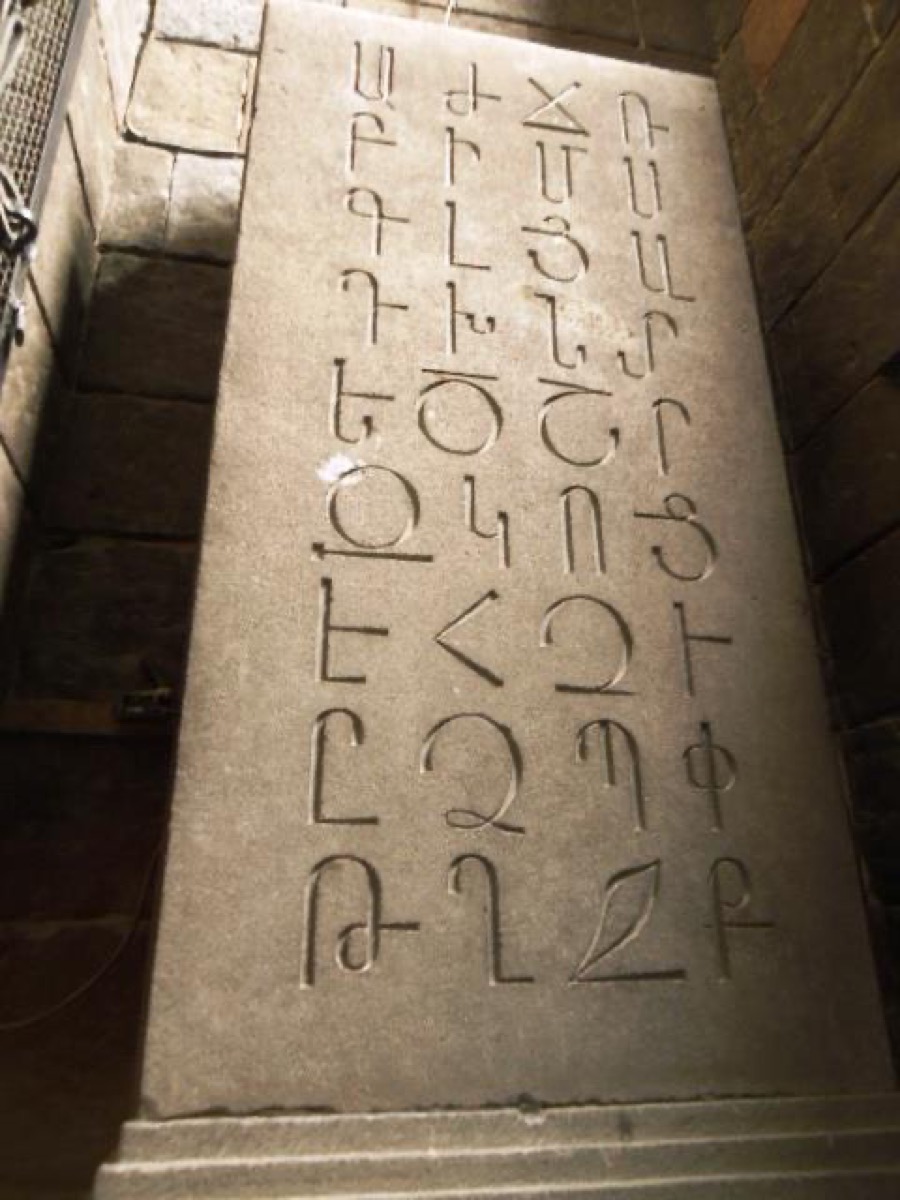
The creation of the Armenian alphabet in 405 AD by Saint Mesrop Mashtots stands as one of the most significant cultural achievements in Armenian history. This unique script, consisting of 36 original letters (later expanded to 39), was designed specifically to capture the sounds of the Armenian language.
Before the alphabet, Armenians used Greek, Syriac, and Persian scripts, which could not adequately represent Armenian sounds. Mesrop Mashtots, a monk and scholar, undertook a divine mission to create a writing system that would allow the Bible and other religious texts to be translated into Armenian.
The alphabet enabled the preservation of Armenian identity through centuries of foreign rule. It facilitated a golden age of Armenian literature, including the translation of the Bible (known as the "Queen of Translations" for its accuracy), historical chronicles, and theological works.
Today, the Armenian alphabet remains virtually unchanged after 1,600 years. It continues to serve as a powerful symbol of Armenian national identity and cultural resilience.