
The Resurgence of an Armenian Kingdom
Following centuries of foreign domination, the Bagratid (Bagratuni) Kingdom of Armenia emerged in the 880s AD, heralding a revival of independent Armenian statehood. Founded by Ashot I the Great, who was recognized as "Prince of Princes" by the Caliphate and "King of Armenia" by Byzantium around 885, the kingdom re-established a native monarchy and became a pivotal political and cultural force in the medieval Caucasus. The Bagratids skillfully navigated the complex geopolitics between the Byzantine Empire and the Abbasid Caliphate to secure their sovereignty.
A Wandering Capital: From Bagaran to Ani
The early Bagratid capital was not fixed, reflecting the kingdom's consolidating power. It began at Bagaran (c. 885–890), moved to Shirakavan (890–929), and then to Kars (929–961). This period saw the stabilization of the realm and the flourishing of Armenian arts and learning under kings like Ashot II Yerkat (the Iron) and Abas I. However, it was under Ashot III the Merciful (reigned 952–977) that the capital found its permanent and most glorious home. In 961, seeking a more defensible and strategically located site, Ashot III transferred his court to the fortified city of Ani, situated along a major east-west caravan route on a triangular plateau protected by deep ravines.
Ani: The Crown Jewel of Medieval Armenia
The transfer of the capital to Ani marked the beginning of its legendary golden age. Under Ashot III and his successors, Smbat II the Conqueror (977–989) and Gagik I (989–1020), Ani was transformed into one of the great metropolises of its time. Its formidable double walls, built by King Smbat, enclosed a city of extraordinary architectural splendor. Ani's prosperity, derived from its control over trade routes, funded an unprecedented building boom. It earned the epithet "The City of 1001 Churches" for its forest of ecclesiastical spires, which showcased the zenith of medieval Armenian architecture.
Architectural Marvels
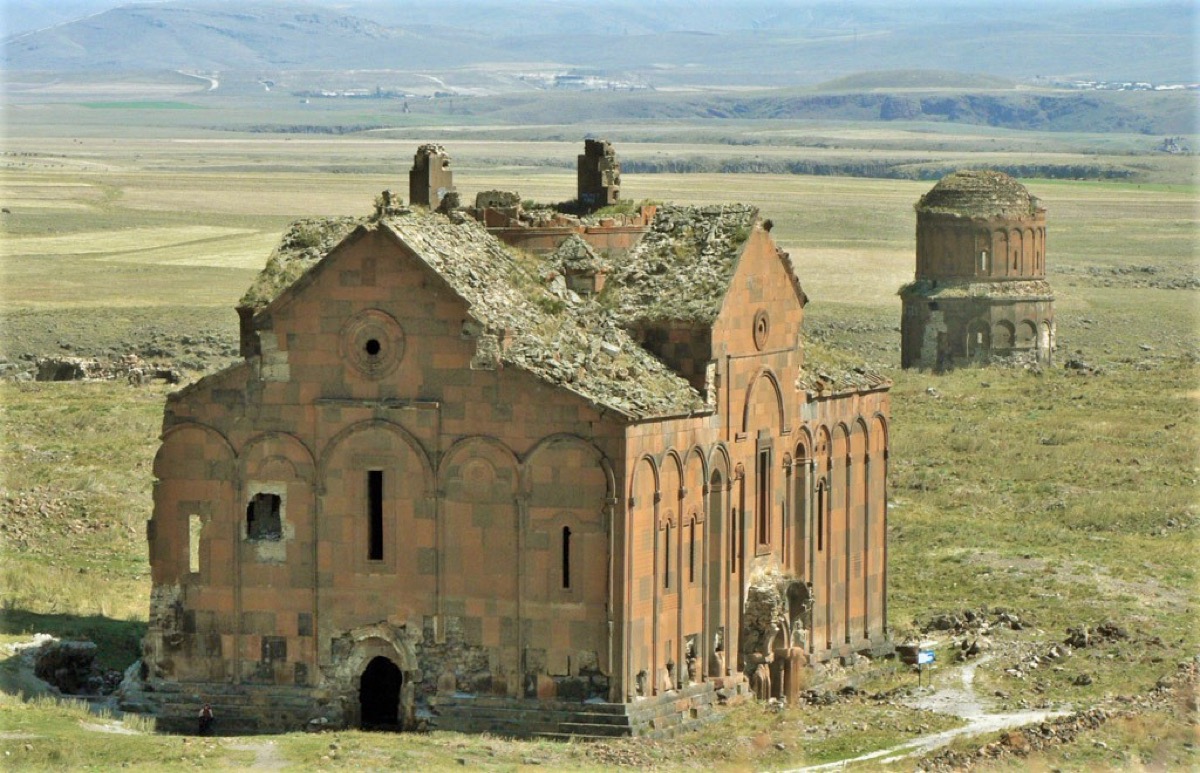
The surviving ruins testify to Ani's grandeur. Key structures include:
- The Cathedral of Ani (989–1001): Designed by the architect Trdat, it was a monumental domed basilica renowned for its innovative pointed arches and rhythmic elegance.
- The Church of the Holy Redeemer (1035): A unique rotunda built to house a fragment of the True Cross, demonstrating advanced engineering.
- The Church of St. Gregory of Tigran Honents (1215): Famous for its exquisite and well-preserved fresco cycles depicting the life of Christ and St. Gregory the Illuminator.
- The citadel, royal palace, bustling markets, and numerous other churches, monasteries, and caravanserais completed the urban landscape.
A Crossroads of Culture and Commerce
Ani was more than a political capital; it was a thriving economic and intellectual hub. Its population, estimated to have been over 100,000 at its peak, was cosmopolitan, including Armenians, Georgians, Greeks, Jews, Muslims, and merchants from across Eurasia. The city became a center for Armenian theological thought, manuscript illumination, and historiography. This golden age represented the culmination of the Armenian medieval renaissance, blending indigenous traditions with influences from Byzantine, Persian, and Islamic cultures.
Decline and Legacy
The kingdom's fortunes waned after the death of Gagik I. Internal dynastic strife weakened the realm, making it vulnerable. In 1045, the Byzantine Empire, capitalizing on this discord, annexed Ani and the core Bagratid lands. The city's true end began with the Seljuk Turk conquest in 1064, followed by a devastating earthquake in 1319, and the shifting of trade routes. Gradually abandoned, Ani became a ghost city, its ruins standing as a silent testament to its past glory.
Today, the haunting ruins of Ani, straddling the modern border between Turkey and Armenia, are a UNESCO World Heritage Site. They remain a powerful symbol of Armenian cultural heritage and the brilliant, yet fragile, apex of the Bagratid Kingdom—a medieval state that briefly restored Armenian sovereignty and created one of the great cities of the Christian East.