
5 min read
Ivan Konstantinovich Aivazovsky (1817-1900), born Hovhannes Aivazian, was an Armenian-Russian Romantic painter considered one of the greatest marine artists in history. His ability to capture the power and beauty of the sea remains unmatched.
## Early Life in Crimea
Born in Feodosia, Crimea, to an Armenian family, young Hovhannes showed artistic talent from childhood. His family had fled from Galicia to Crimea to escape persecution. Despite poverty, his talent attracted attention, and he received a scholarship to the Imperial Academy of Arts in St. Petersburg.
## Rise to Fame
At the Academy, Aivazovsky excelled, winning gold medals and catching the attention of the Russian court. His early seascapes demonstrated an unusual ability to capture light on water—a skill that would define his career.
By his mid-twenties, Aivazovsky was already famous throughout Europe. He traveled to Italy, where his work was celebrated alongside the great masters. Pope Gregory XVI purchased one of his paintings for the Vatican.
## Artistic Achievement
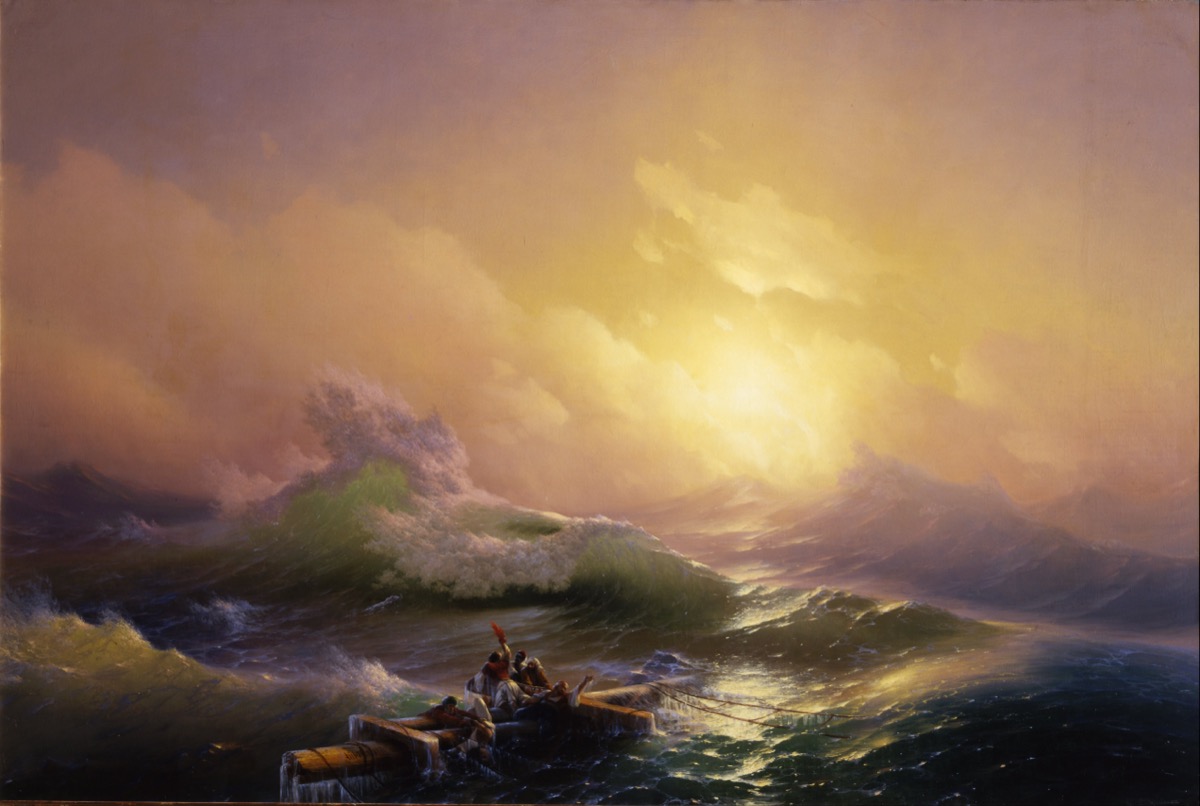
Over his 60-year career, Aivazovsky created approximately 6,000 paintings. His most famous work, "The Ninth Wave" (1850), depicts survivors of a shipwreck clinging to debris as an enormous wave approaches. The painting captures both the terror and sublime beauty of the sea.
His technique was remarkable. Aivazovsky painted quickly, often completing a canvas in a single session. He worked from memory rather than sketches, believing this captured the emotional truth of scenes rather than mere accuracy.
## Themes and Style
Water was Aivazovsky's primary subject—storms, calm seas, sunsets, moonlight on waves. He painted ships, battles, and biblical scenes, always with the sea as protagonist. His mastery of light effects, particularly his ability to paint moonlight and the glow of burning ships, was legendary.
## Armenian Identity
Despite spending most of his life in Russia, Aivazovsky never forgot his Armenian roots. He painted Armenian subjects, supported Armenian causes, and funded the construction of an archaeological museum in Feodosia. His painting "Noah's Descent from Ararat" reflects his Armenian heritage.
## Legacy
Aivazovsky died in Feodosia in 1900, working until the end. His tombstone bears an Armenian inscription: "Born mortal, left an immortal memory." The Aivazovsky National Art Gallery in Feodosia houses the world's largest collection of his works.
His influence extends beyond Armenia and Russia. Marine painters worldwide study his techniques, and his paintings fetch millions at auction. Aivazovsky demonstrated that an Armenian from a refugee family could become one of history's greatest artists.
Tags
art,painter,marine,russia,19th-century