
6 min read
Armenian carpet weaving represents one of the world's oldest and most sophisticated textile traditions. For thousands of years, Armenian weavers have created carpets that are not merely floor coverings but repositories of cultural memory, religious symbolism, and artistic excellence.
## Ancient Origins
Evidence suggests that carpet weaving in the Armenian Highland dates back to at least the 7th century BCE. Ancient Armenian carpets were prized throughout the ancient world, mentioned by Herodotus and traded along the Silk Road. The distinctive "Armenian knot" technique has influenced carpet-making across the Middle East and Central Asia.
## Symbolic Language
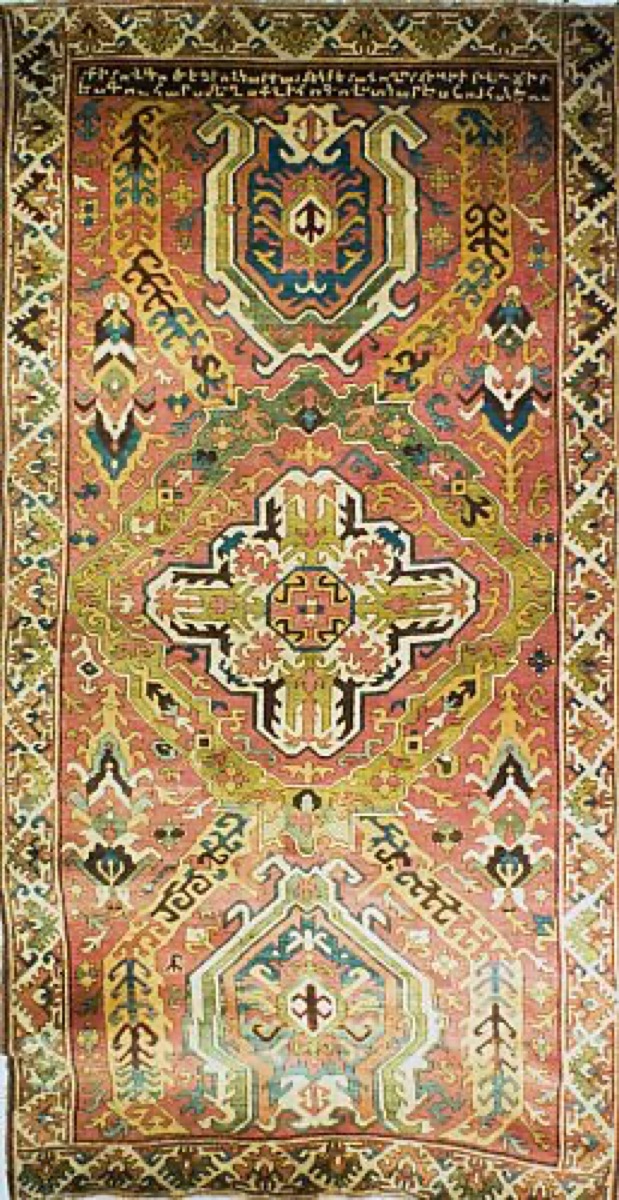
Armenian carpets speak a visual language passed down through generations. Common motifs include:
- **The Dragon (Vishap)**: An ancient Armenian symbol representing water and fertility
- **The Tree of Life**: Symbolizing eternity and the connection between earth and heaven
- **The Wheel of Eternity (Arevakhach)**: An ancient sun symbol predating Christianity
- **Birds and Flowers**: Representing paradise and the Armenian homeland
These symbols connect modern weavers to their ancient ancestors, making each carpet a thread linking past and present.
## Regional Styles
Different regions of historic Armenia developed distinctive styles:
- **Karabakh carpets** are known for their bold geometric patterns and rich reds
- **Van carpets** featured intricate floral designs influenced by Persian and Ottoman traditions
- **Artsakh carpets** display unique dragon motifs found nowhere else in the world
- **Lori carpets** use simpler designs with powerful symbolic content
## The Weaving Process
Traditional Armenian carpet weaving requires immense skill and patience. A single carpet may take months or even years to complete. Weavers use the "double-knot" technique that creates especially durable carpets capable of lasting centuries.
Natural dyes from local plants create the distinctive colors: madder root for red, indigo for blue, pomegranate skin for yellow, and walnut shells for brown. These natural colors age beautifully, giving antique Armenian carpets their prized patina.
## Cultural Significance
In Armenian culture, carpets served as dowries, religious offerings, and family heirlooms. The act of weaving was traditionally taught from mother to daughter, making it a form of women's knowledge transmission. Young girls would begin learning at age six or seven, mastering increasingly complex patterns over years.
## Preservation and Revival
The Armenian Genocide disrupted traditional weaving communities, but efforts to preserve and revive the art continue. In Armenia and the diaspora, artisans are documenting ancient patterns and teaching new generations. Museums in Yerevan display masterpiece carpets alongside weaving demonstrations.
## Carpets as Cultural Ambassadors
Today, Armenian carpets hang in museums worldwide, from the Metropolitan Museum of Art to the Louvre. Each carpet tells a story of Armenian creativity, resilience, and the power of craft to preserve cultural identity across generations.
Tags
carpets,weaving,crafts,tradition,art,textiles