
7 min read
In 301 AD, Armenia made a decision that would define its civilization for the next two millennia: it became the first nation in the world to adopt Christianity as its state religion. This bold choice, made under King Tiridates III and through the influence of Saint Gregory the Illuminator, has shaped every aspect of Armenian culture, from art and architecture to language and national identity.
## The Conversion Story
The story of Armenia's conversion reads like an epic tale. Gregory, born into Armenian nobility but raised a Christian in Caesarea, returned to Armenia to spread his faith. King Tiridates, initially hostile to Christianity, imprisoned Gregory in a deep pit at Khor Virap for 13 years.
When the king fell mysteriously ill, his sister had a vision that only Gregory could heal him. Released from his prison, Gregory cured the king, who then converted to Christianity along with his entire court. The kingdom followed, making Armenia officially Christian in 301 AD—a full decade before the Roman Empire's Edict of Milan.
## Building a Christian Civilization
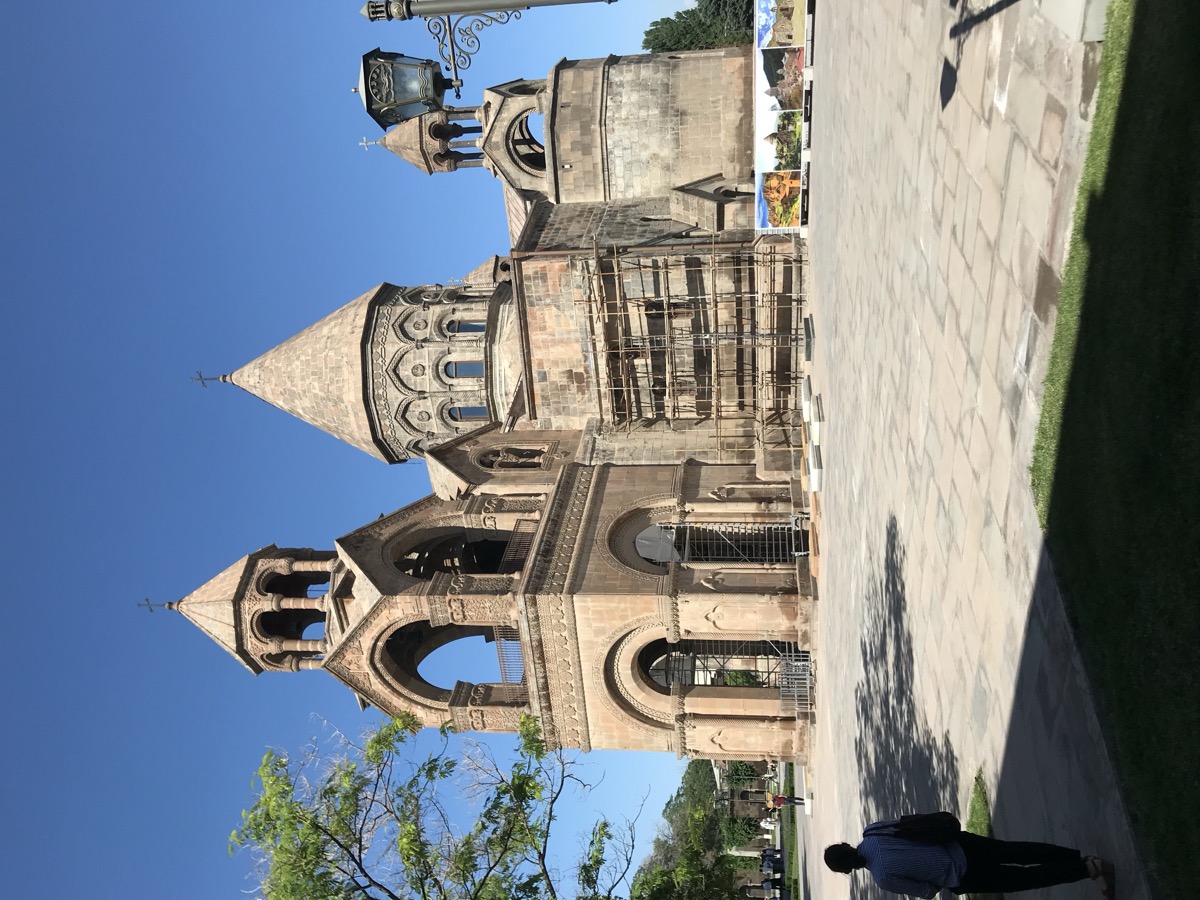
The conversion sparked an explosion of church building. Armenia's distinctive church architecture evolved, featuring domed structures with conical roofs, intricately carved stone khachkars (cross-stones), and innovative techniques that would later influence Byzantine and European architecture.
The Mother Cathedral at Etchmiadzin, founded by Gregory himself, remains the spiritual center of the Armenian Apostolic Church. It is considered the oldest cathedral in the world still in use, a living connection to Christianity's earliest organized expression as a state religion.
## The Armenian Apostolic Church
The Armenian Apostolic Church developed its own unique traditions, distinct from both Roman Catholicism and Eastern Orthodoxy. It recognizes only the first three Ecumenical Councils and maintains its own liturgical calendar, religious music, and sacramental practices.
The church played a crucial role in preserving Armenian identity during centuries of foreign rule. When political independence was lost, the church maintained continuity, serving as the institution through which Armenian language, culture, and consciousness survived.
## Religious Art and Architecture
Christian faith inspired extraordinary artistic achievements. Armenian miniature painters created some of the medieval world's most beautiful illuminated manuscripts. Stone carvers developed the khachkar into a unique art form, creating thousands of intricate cross-stones that dot the Armenian landscape.
Church architecture evolved distinctive features: the use of tufa stone in multiple colors, complex geometric dome designs, and carved facades depicting biblical scenes. These techniques influenced architecture from Georgia to Italy.
## Identity and Survival
Christianity became inseparable from Armenian identity. Through Arab, Mongol, Persian, and Ottoman occupations, the church served as the primary institution maintaining Armenian distinctiveness. The phrase "to be Armenian is to be Christian" reflected this fusion of religious and national identity.
This connection also brought persecution. Armenians suffered for their faith, refusing conversion to Islam despite incentives and threats. The Armenian Genocide of 1915 was in part a religious persecution, targeting Christian Armenians in the collapsing Ottoman Empire.
## Living Tradition
Today, the Armenian Apostolic Church continues to serve Armenians worldwide. Major holidays like Easter and Christmas (celebrated on January 6) bring communities together. Baptisms, weddings, and funerals follow ancient rituals largely unchanged for centuries.
For visitors to Armenia, the country's Christian heritage is visible everywhere: in the churches perched on mountainsides, in the khachkars standing in fields, and in the faith that continues to define Armenian identity after 1,700 years.
Tags
christianity,religion,history,church,gregory,faith