
Back to History
Ancient (Before 300 AD)
95-55 BCE
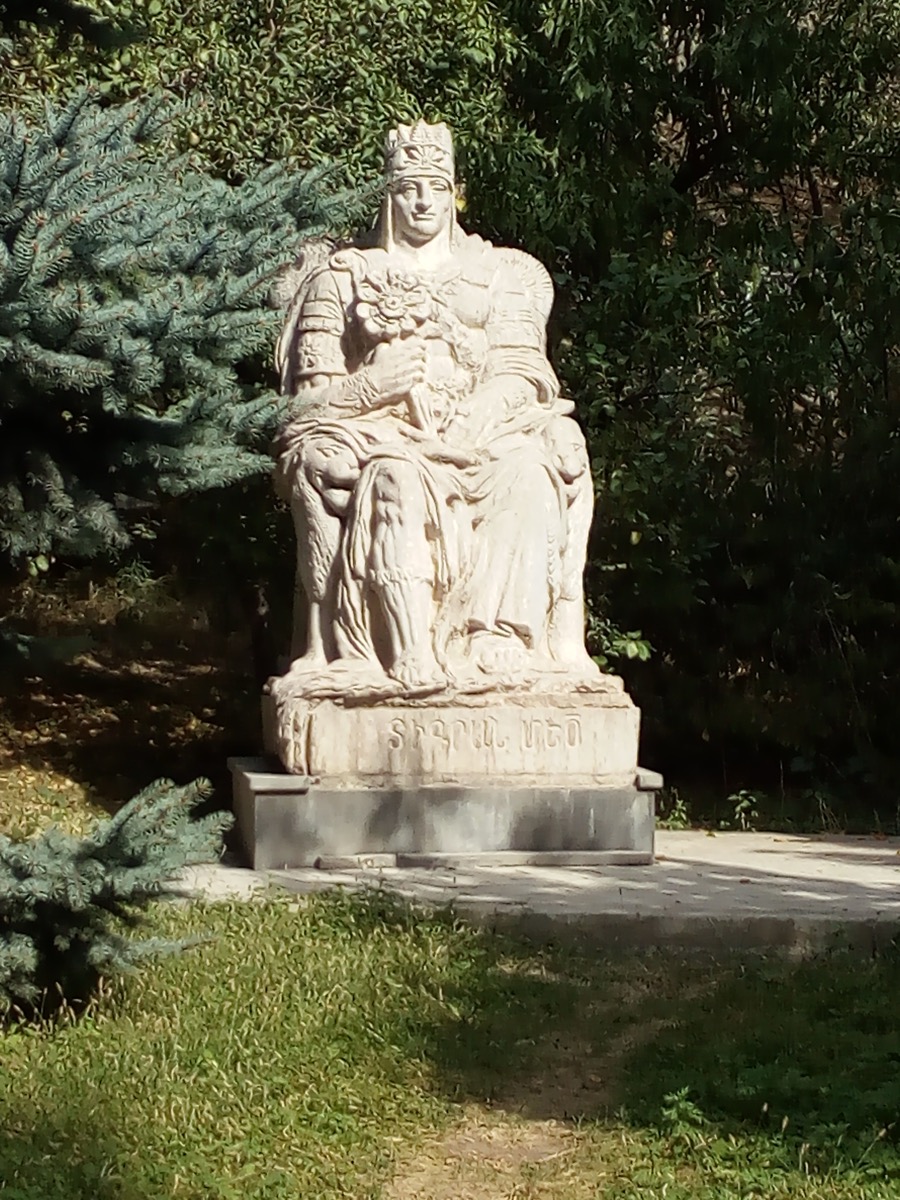
Tigranes the Great: Armenia's Mightiest King and His Empire
Discover how Tigranes II transformed Armenia into a vast empire stretching from the Caspian Sea to the Mediterranean, earning the title "King of Kings" and establishing Armenia as a major power in the ancient world.
Tigranes II, known as Tigranes the Great (140-55 BCE), stands as the most powerful monarch in Armenian history. Under his rule, Armenia expanded from a regional kingdom to a vast empire that stretched from the Caspian Sea to the Mediterranean, briefly rivaling Rome itself.
## From Hostage to King
Tigranes' path to power began in captivity. In 115 BCE, following Armenia's defeat against the Parthians, young Tigranes was sent as a hostage to the Parthian court, where he remained for over two decades. This experience, while constraining, exposed him to the sophisticated politics and military strategies of one of the ancient world's great powers.
In 95 BCE, the Parthians released Tigranes to assume the Armenian throne, demanding the cession of the "Seventy Valleys" as payment. The Parthians likely expected a compliant client king. They were profoundly mistaken.
## Building an Empire
Upon securing his throne, Tigranes embarked on an ambitious campaign of expansion. He first recovered the territories ceded to Parthia, then turned his attention in all directions:
**Eastern Conquests**: Tigranes absorbed Sophene, Gordyene, and Adiabene, extending Armenian control deep into Mesopotamia.
**Southern Expansion**: When the Seleucid Empire collapsed into civil war, Syria's weary nobles offered Tigranes their crown. By 83 BCE, Armenian rule extended to the Mediterranean coast.
**Northern Campaigns**: Armenia absorbed parts of Cappadocia and Pontus, reaching the shores of the Black Sea.
At its zenith, Tigranes' empire covered approximately 900,000 square kilometers—larger than any Armenian state before or since. The Greek writer Plutarch noted that Tigranes was always accompanied by four lesser kings who served as his attendants, symbolizing his supreme status.
## Tigranocerta: City of Kings
To showcase his power, Tigranes constructed a new capital city: Tigranocerta. Located at the strategic crossroads between Armenia and Mesopotamia, this magnificent city was populated by forced relocations from captured Greek cities, creating a cosmopolitan center of culture and commerce.
The city featured Greek theaters, Persian gardens, and Armenian temples. Tigranes himself adopted elements from multiple cultures—using the Persian title "King of Kings" while patronizing Greek arts and maintaining Armenian religious traditions.
## Collision with Rome
Tigranes' expansion brought him into inevitable conflict with Rome. When Mithridates VI of Pontus, Tigranes' father-in-law, fled to Armenia after defeat by Roman forces, Tigranes' refusal to surrender him triggered war.
The Roman general Lucullus invaded Armenia in 69 BCE, defeating Tigranes at the Battle of Tigranocerta. The city fell, though Lucullus' army later mutinied, preventing the conquest of Armenia proper. In 66 BCE, Pompey arrived with fresh forces, and the aging Tigranes, recognizing the odds, negotiated surrender.
## The Final Settlement
Tigranes' submission to Pompey was dignified rather than humiliating. He retained Armenia proper as a Roman client state, ruling until his death around 55 BCE at approximately 85 years old. His successors would maintain this arrangement for generations.
## Legacy
Tigranes remains a powerful symbol of Armenian national pride. His "sea to sea" empire—from the Caspian to the Mediterranean—represents the peak of Armenian political power. Modern Armenia's national identity draws heavily on this era of greatness.
Streets, schools, and institutions throughout Armenia bear his name. The image of Tigranes has appeared on Armenian currency, and his reign serves as a reminder that Armenia once stood among the great powers of the ancient world.
For Armenians, Tigranes embodies the nation's potential for greatness—a small people who, under exceptional leadership, could build an empire rivaling the mightiest civilizations of their age.