
The Foundations of Dispersion
The story of the Armenian Diaspora is one of both ancient movement and profound modern tragedy, culminating in a global network that has preserved Armenian identity and exerted significant influence worldwide. While often associated with the catastrophic events of the early 20th century, Armenian communities outside the historic homeland have existed for millennia. As early as the reign of Tigranes the Great (95–55 BCE), Armenian influence extended into regions like Phoenicia (modern-day Lebanon). The conversion of Armenia to Christianity in 301 CE further established connections, with Armenian pilgrims and merchants creating nodes along trade routes to Jerusalem and beyond, including in Lebanon where some Roman troops of Armenian origin were stationed.
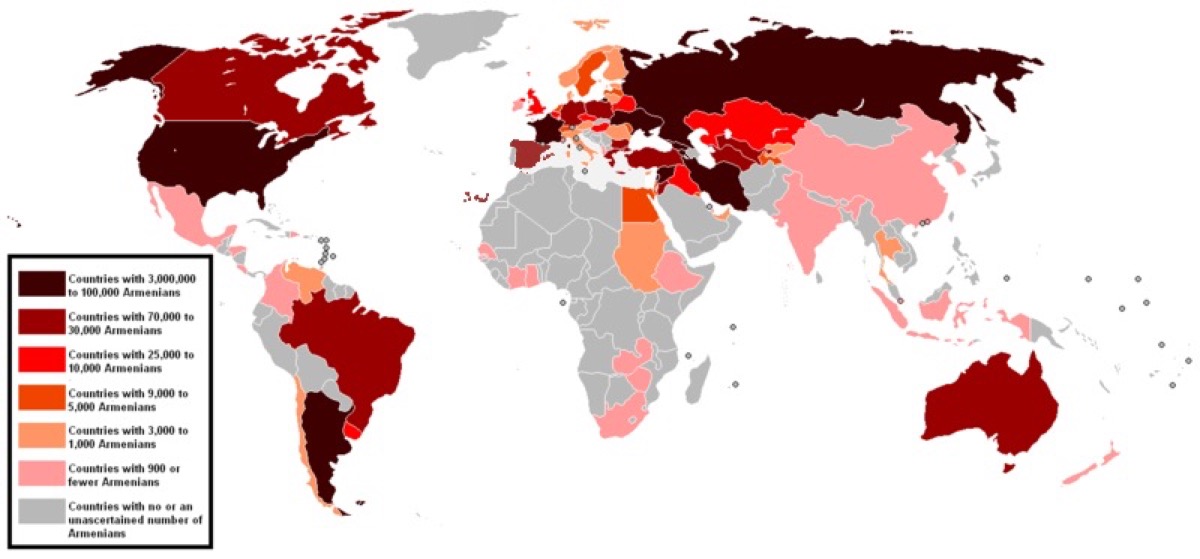
These pre-modern communities, often centered around trade and religion, laid a foundational template for later diasporic life. However, the defining catalyst for the modern Armenian Diaspora was the Armenian Genocide of 1915–1923, perpetrated by the Ottoman Empire. The systematic destruction and forced deportation of the Armenian population from their ancestral lands resulted in the death of approximately 1.5 million people and the scattering of survivors across the globe. This cataclysmic event transformed a historical pattern of migration into a vast, trauma-informed diaspora, with survivors seeking refuge primarily in the Levant (especially Syria and Lebanon), Iran, France, and the United States.
Waves of Migration and Community Formation
The diaspora formed in distinct waves, each shaping the character of Armenian communities abroad. The first major wave to the United States, for instance, occurred in the late 19th and early 20th centuries, driven by the Hamidian massacres of the 1890s and the Adana massacre of 1909. A second, larger wave arrived in the aftermath of the Genocide.
Subsequent political upheavals prompted further migration, reinforcing and redirecting the diaspora's hubs. The 1975 Lebanese Civil War and the 1979 Iranian Revolution triggered significant exoduses from those historically integrated and prosperous communities. As noted in sources, Armenians in Lebanon and Iran had achieved notable success, with parliamentary representation and significant economic standing. Their multilingual skills and professional experience facilitated their re-establishment in new host countries, particularly in North America and Western Europe. The collapse of the Soviet Union and the Nagorno-Karabakh conflicts spurred further movements from Armenia and the post-Soviet sphere.
Global Impact and Enduring Influence
The Armenian Diaspora's impact is multifaceted, spanning cultural preservation, political advocacy, and economic contribution. Diasporan communities have been instrumental in sustaining Armenian language, literature, music, and religious traditions far from the homeland. The Armenian Apostolic Church, along with Catholic and Evangelical denominations, has served as a cornerstone of community cohesion and identity preservation in cities from Los Angeles and Montreal to Buenos Aires and Sydney.
Politically, the diaspora has maintained the international recognition of the Armenian Genocide as a central mission. Through relentless advocacy, diaspora organizations have secured formal recognition of the Genocide by numerous national parliaments, including the U.S. Congress, and international bodies. This activism has kept issues of historical justice and human rights at the forefront of Armenia's international relations.
Economically, diaspora communities have demonstrated remarkable entrepreneurial success, contributing significantly to their host societies. Furthermore, remittances and investments from the diaspora have been a crucial lifeline for the Republic of Armenia since its independence in 1991, funding infrastructure, charity, and business ventures. The diaspora also plays a critical role in humanitarian efforts, especially during crises such as the 2020 Nagorno-Karabakh war and the subsequent displacement of Armenians from the region.
A Dual Identity and the Future
The Armenian Diaspora exemplifies a powerful duality: deep integration into host societies coupled with a vigorous preservation of distinct ethnic identity. Communities evolved from purely survival-oriented enclaves into dynamic, globally connected networks. Today, the diaspora acts as a transnational bridge, facilitating cultural exchange and diplomatic dialogue. It faces ongoing challenges, including assimilation pressures and the need to engage with a developing homeland, but its legacy is one of resilience. From ancient pilgrims to genocide survivors, the Armenian Diaspora has turned a narrative of displacement into one of enduring global presence, ensuring that Armenian voices, memory, and culture continue to shape the world.